
Just a 50-minute walk or sit in nature can increase our cognitive performance by 20 percent.
A seminal study on the cognitive benefits of nature, conducted by Dr. Marc Berman and colleagues1 , demonstrated that going for a nature walk (compared to a walk downtown near traffic, noise, and harsh visual stimulation) after completing mentally fatiguing tasks and a mood assessment restored participants’ attention and cognitive abilities by up to 20%. If participants enjoyed the walk, they also noted increased mood scores afterwards; even if they felt neutral about the walk, their cognitive performance scores still increased. Those who took the walk downtown experienced no change in cognitive scores.
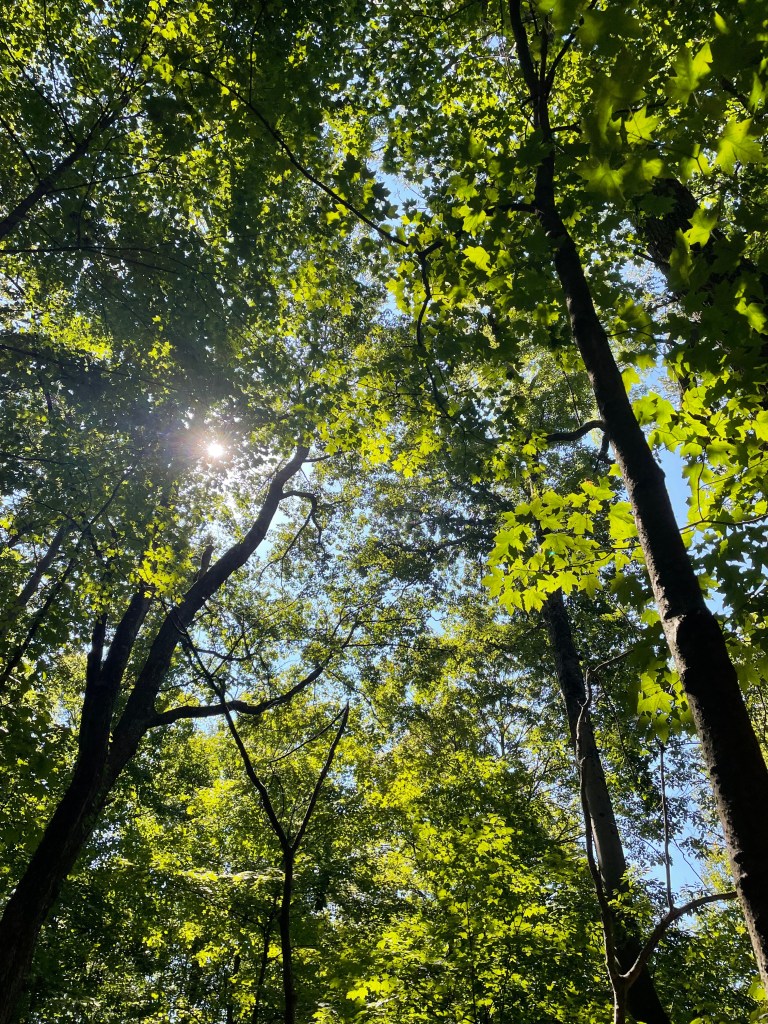
Nature and its relaxing visual stimuli and sounds allow our brains to rest. When we are out in nature, our involuntary attention (that which is triggered by external stimuli) gently engages with the natural environment, like the sound of birdsong, light sway of tree branches, or the sparkles of sunlight as it dances over the surface of water. This results in what is called soft fascination, which allows our directed-attention (that which we use for concentrating on tasks) to recharge.2 And while multi-day backcountry and wilderness experiences are powerful, transformative, and restorative in deep ways (perhaps the topic of another post), a simple metro park, arboretum, or local lake or even a quiet tree-lined neighborhood will do just fine!
What’s even more incredible is that the results from the 2008 study were both confirmed and expanded in a follow-up study. This second study further demonstrated that individuals with clinical depression received a cognitive boost five times that of non-clinical participants in the first study.3 Conversely, their cognitive performance actually decreased after the urban walk, which did not occur to participants in the first study. Participants’ moods also increased after the walk in nature.
The findings of this study not only reinforce the cognitively restorative value of being in nature, they also suggest that individuals with depression may be more impacted by both the positive effects of being in nature and the negative effects to cognition from urban environments compared to individuals without depression.
This means that when we are feeling that oh so familiar fatigue and lack of focus in the mid-afternoon slump (we all know that 3pm struggle), it’s much better to go for a walk through a park to refresh our mental and emotional batteries than turning to more coffee, Instagram, or cookies (all things I have done). Even a 20 to 30-minute walk can offer us restorative benefits. I personally feel more energized, creative, and focused after a walk in nature, which I try to regularly incorporate into my day, especially if I’m feeling stuck.

And if we find ourselves feeling down or struggling with depression, remember that a breath of fresh air might do more than simply serve as a common idiom. I know that depression can make it difficult to go do things that we know are “good for us” (even just getting out of bed can feel herculean – yes, I feel you). However, when in the throes of depressive thoughts or even feeling burnt out, we can consider using some of our limited energy to go for a nature walk – let it be a means to heal, restore, and prioritize ourselves and our wellbeing. It might just give us more of a boost than we think, help reduce some of that negative cyclical rumination, and restore our attention, focus, and mental clarity so we can feel more ourselves again.
References
- Berman, M. G., Jonides, J., & Kaplan, S. (2008). Psychological Science The Cognitive Benefits of Interacting With Nature. https://doi.org/10.1111/j.1467-9280.2008.02225.x
↩︎ - Berman, M.G. (2025). Nature and the Mind: The science of how nature improves cognitive, physical, and social well-being. S&S/Simon Element. New York, NY.
↩︎ - Berman, M. G., Kross, E., Krpan, K. M., Askren, M. K., Burson, A., Deldin, P. J., Kaplan, S., Sherdell, L., Gotlib, I. H., & Jonides, J. (2012). Interacting with Nature Improves Cognition and Affect for Individuals with Depression. https://doi.org/10.1016/j.jad.2012.03.012
↩︎
If you enjoyed reading this, please consider sharing it with others you think will find it interesting!
You can also subscribe to my newsletter at liveclearlifecoaching.com and follow my Substack for weekly nature-based wellness, mindfulness, and lifestyle reflections.
 Live Clear Integrative Wellness & Life Coaching
Leave a comment